
Dambulla Cave Temple
A UNESCO-listed complex of five cave shrines containing 157 statues and about 2,100 square metres of historic murals.
At a glance
Plan your site visit
Check the visit effort, entry guidance, and suitable visiting conditions before travelling.
Travel distance
Visit effort
Best visit time
Entry fee
Overview
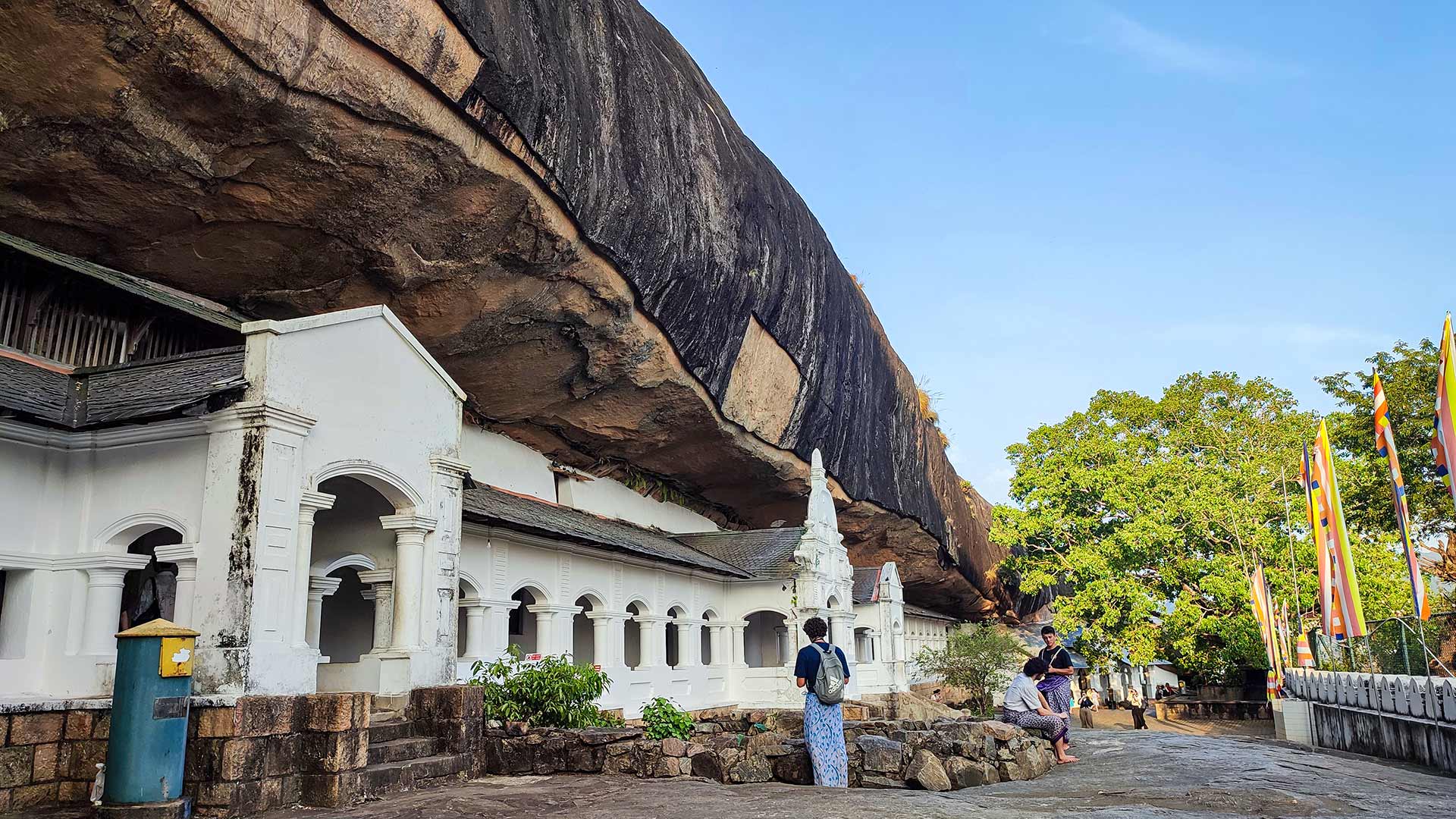
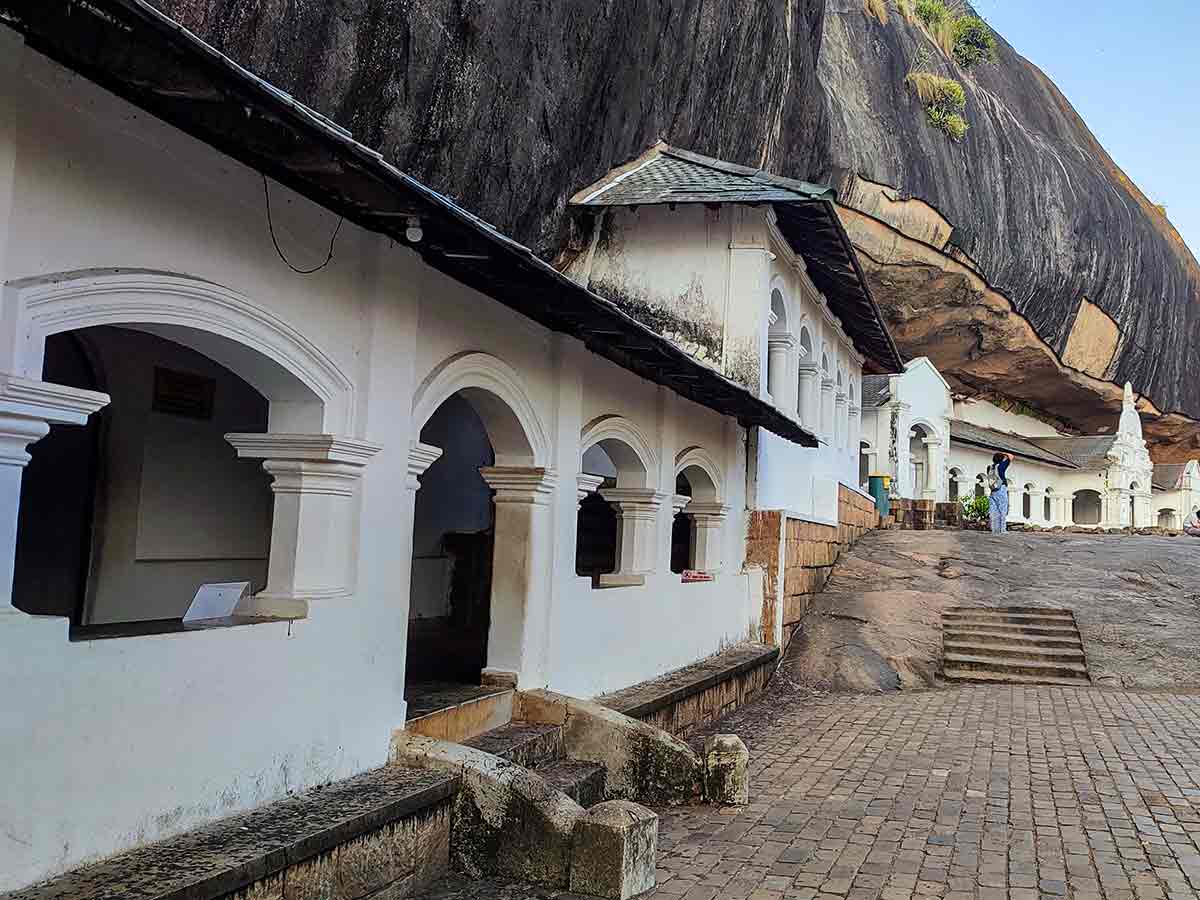
Dambulla Cave Temple, also known as the Golden Temple of Dambulla, is one of Sri Lanka's most significant cultural and religious landmarks. Located in the central part of the island, this UNESCO World Heritage Site consists of a series of cave temples built into a massive rock rising approximately 160 metres above the surrounding plains.
The site's history reaches back more than two millennia. Sri Lankan tradition associates its early development with King Valagamba in the 1st century BCE, and successive rulers expanded or restored the shrines over later centuries.
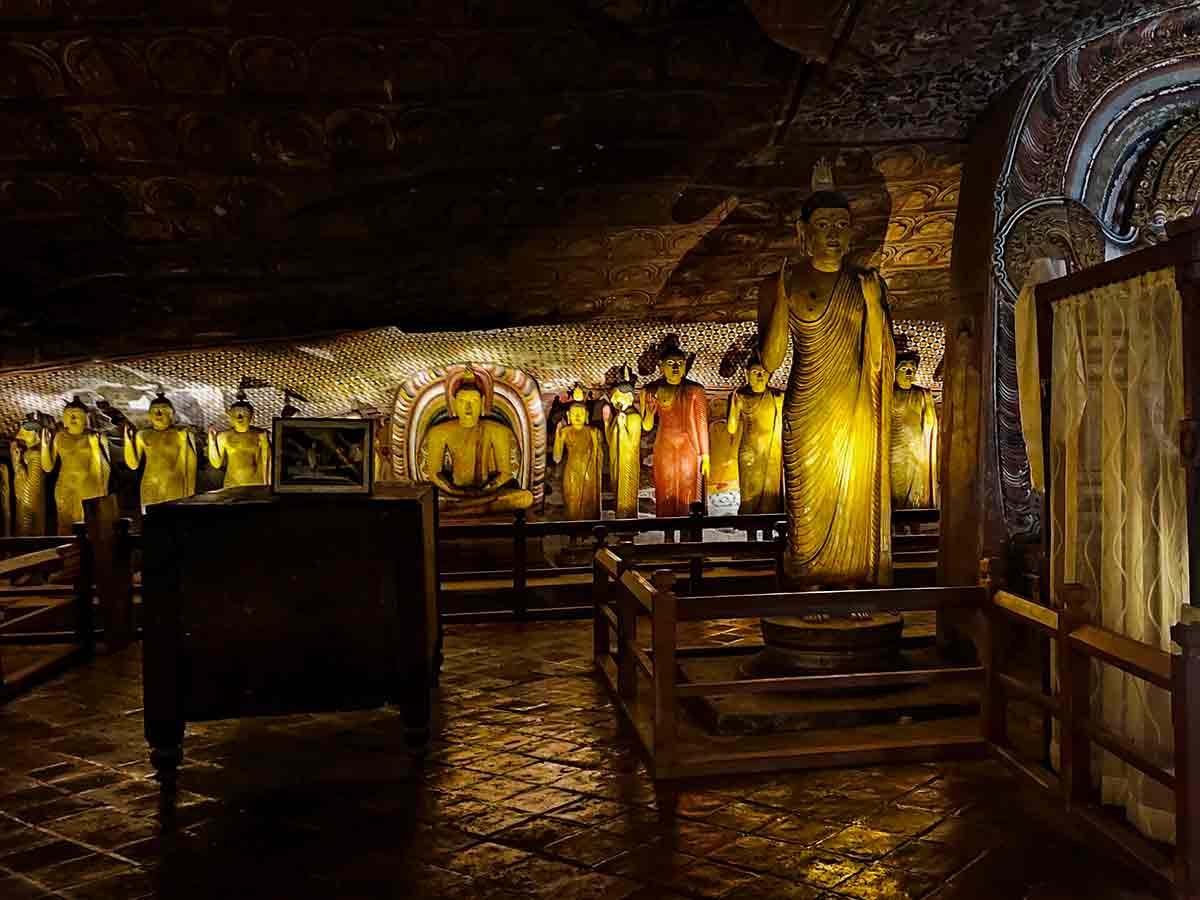
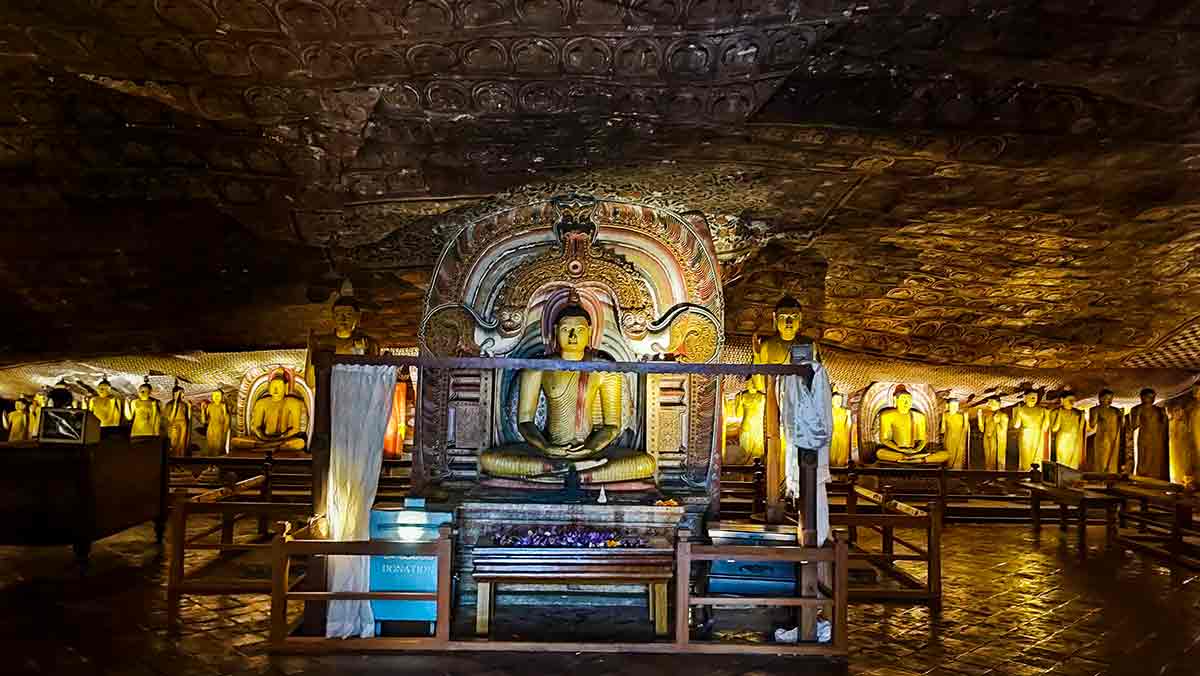
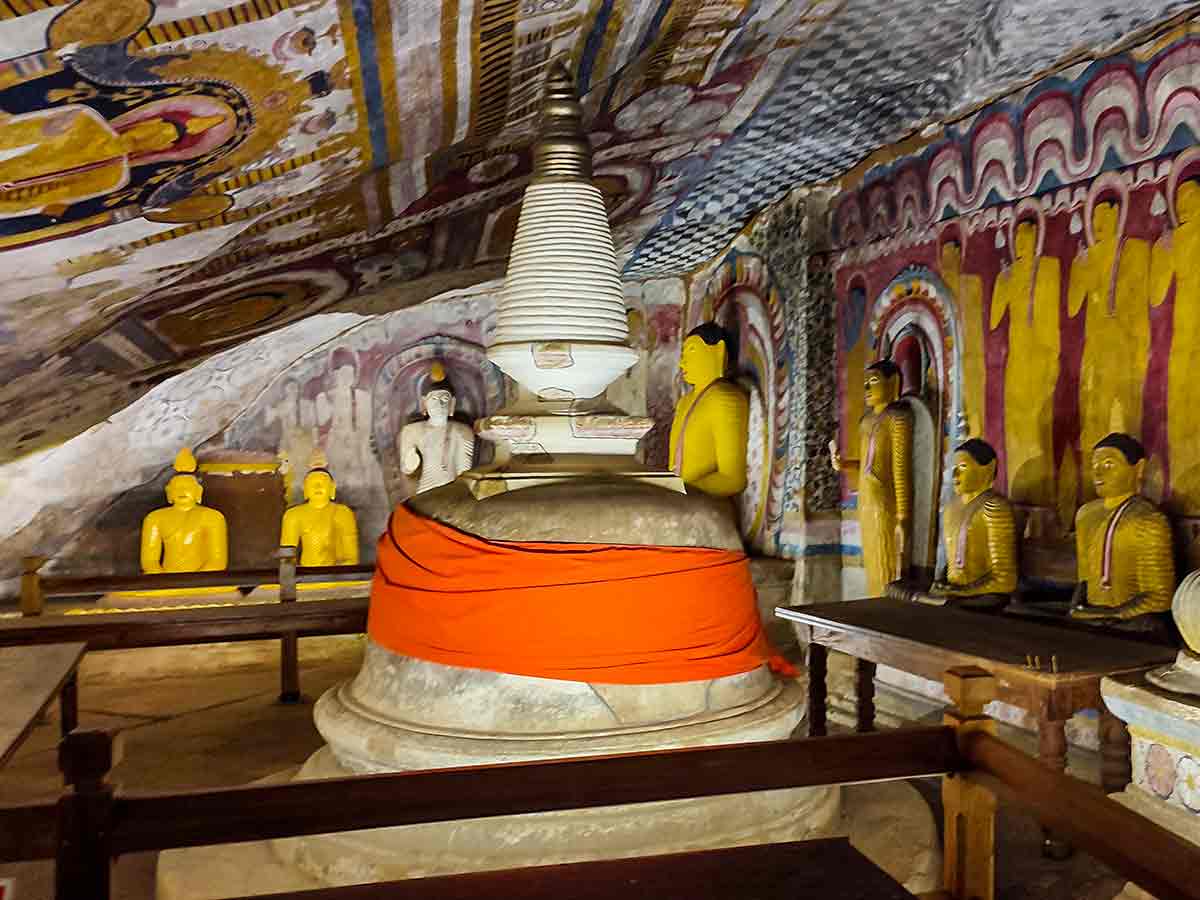
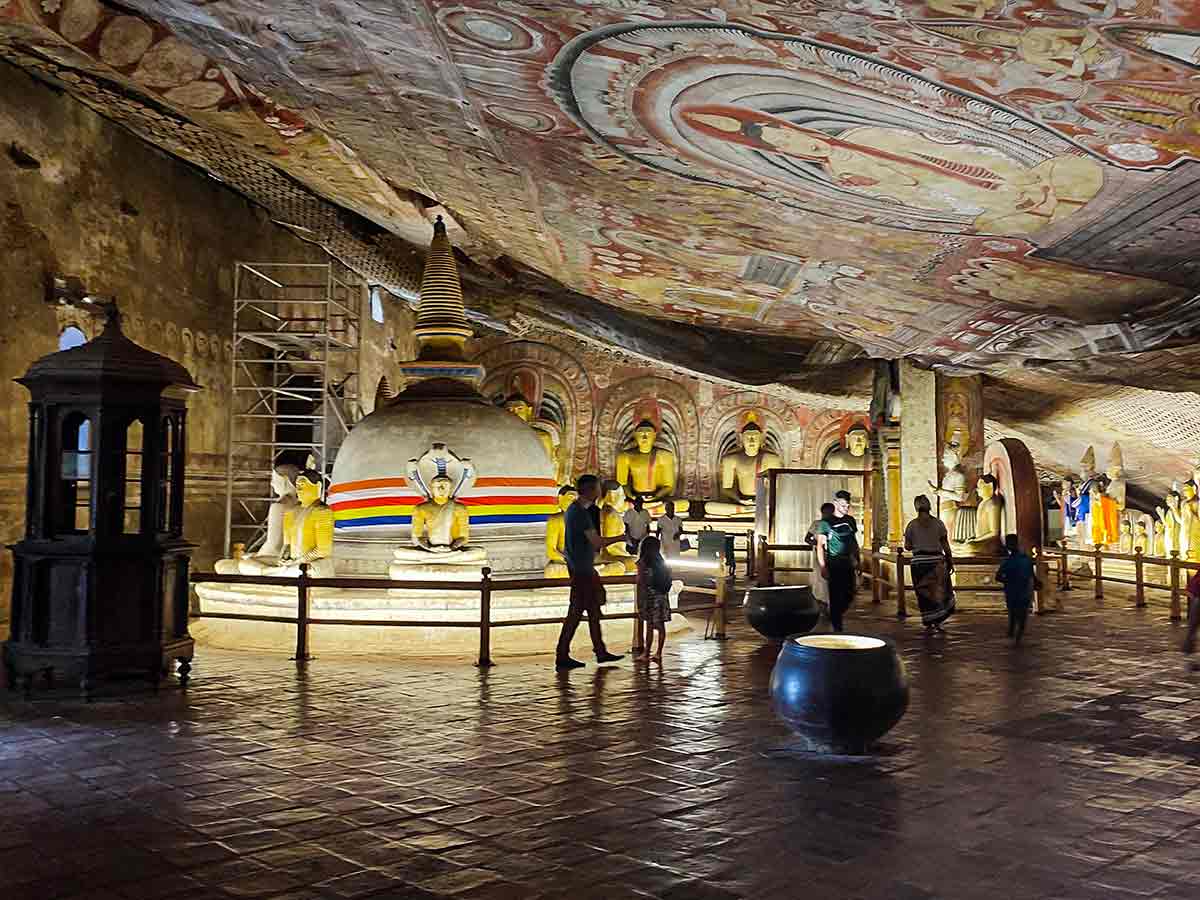
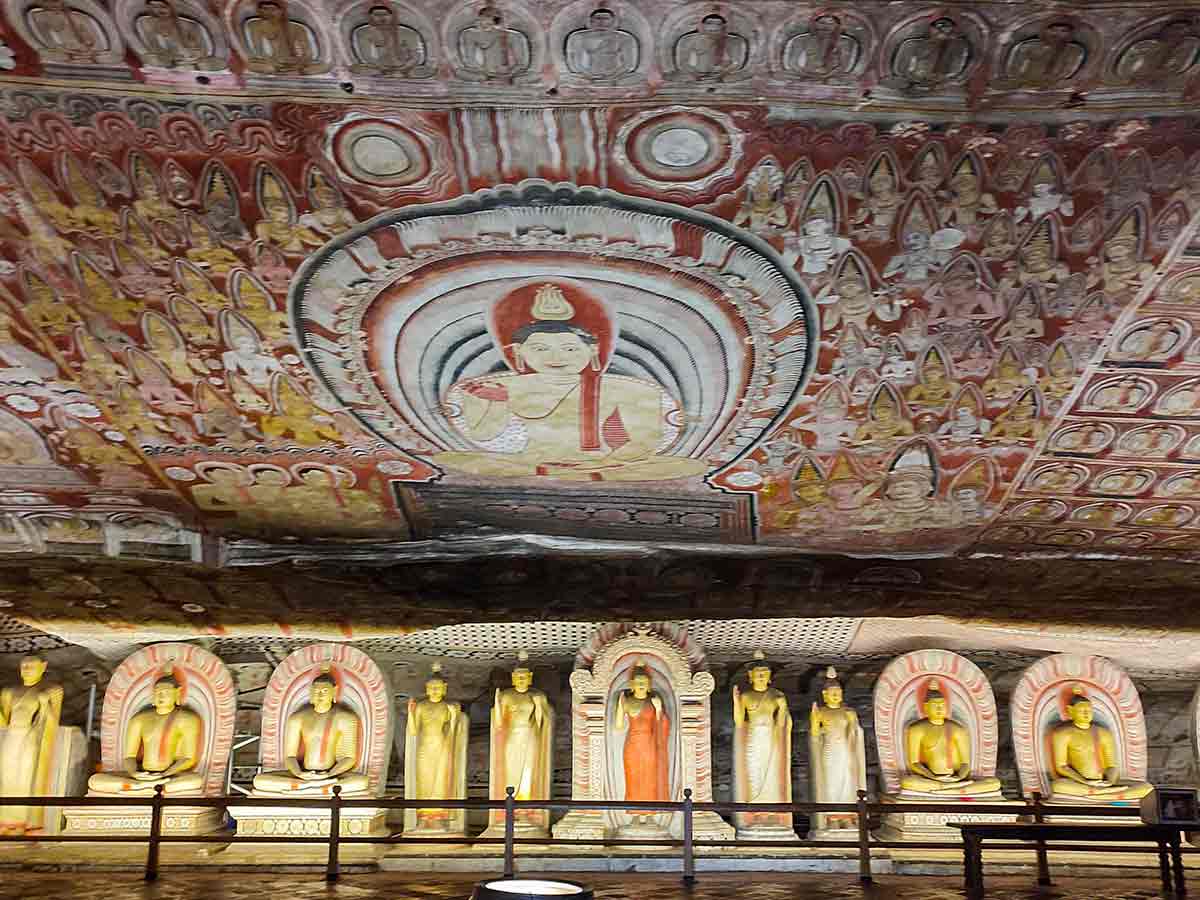
The temple complex is made up of five main caves containing 157 statues, along with statues of Sri Lankan kings and Hindu deities such as Vishnu and Ganesha. The interiors are richly decorated with murals covering about 2,100 square metres, depicting scenes from the life of the Buddha and important historical events.
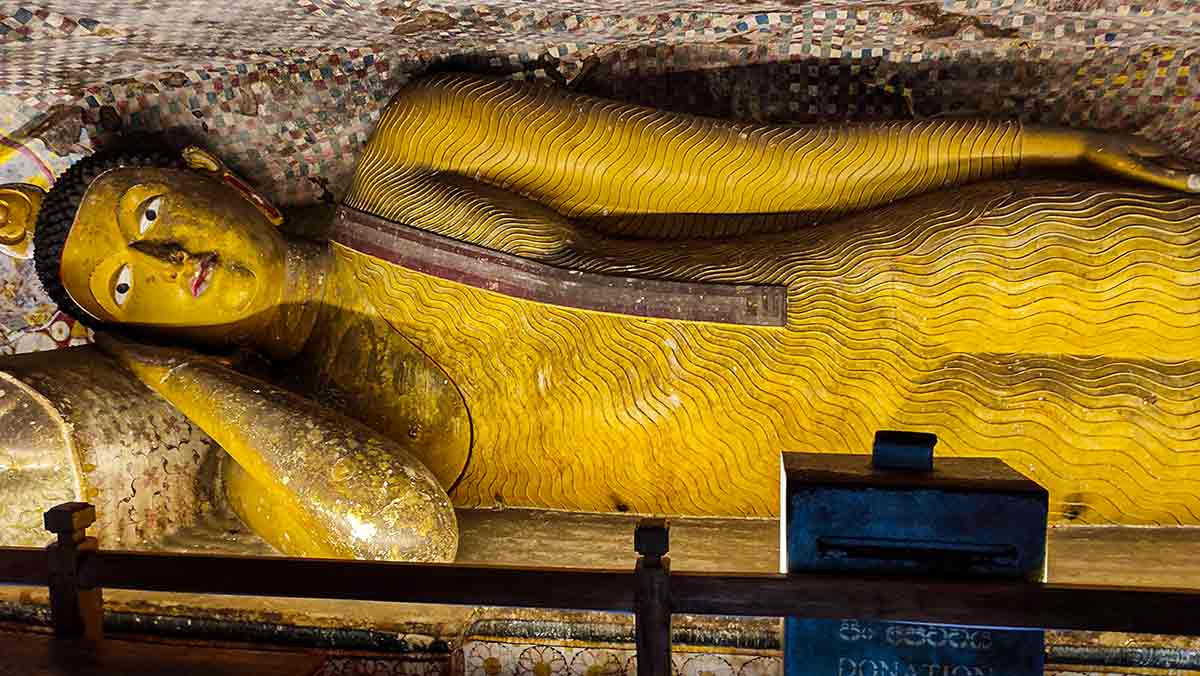
The largest cave, known as the Cave of the Great Kings, features dozens of Buddha statues and elaborate ceiling paintings, while the Cave of the Divine King houses a 14-metre-long reclining Buddha carved directly into the rock.
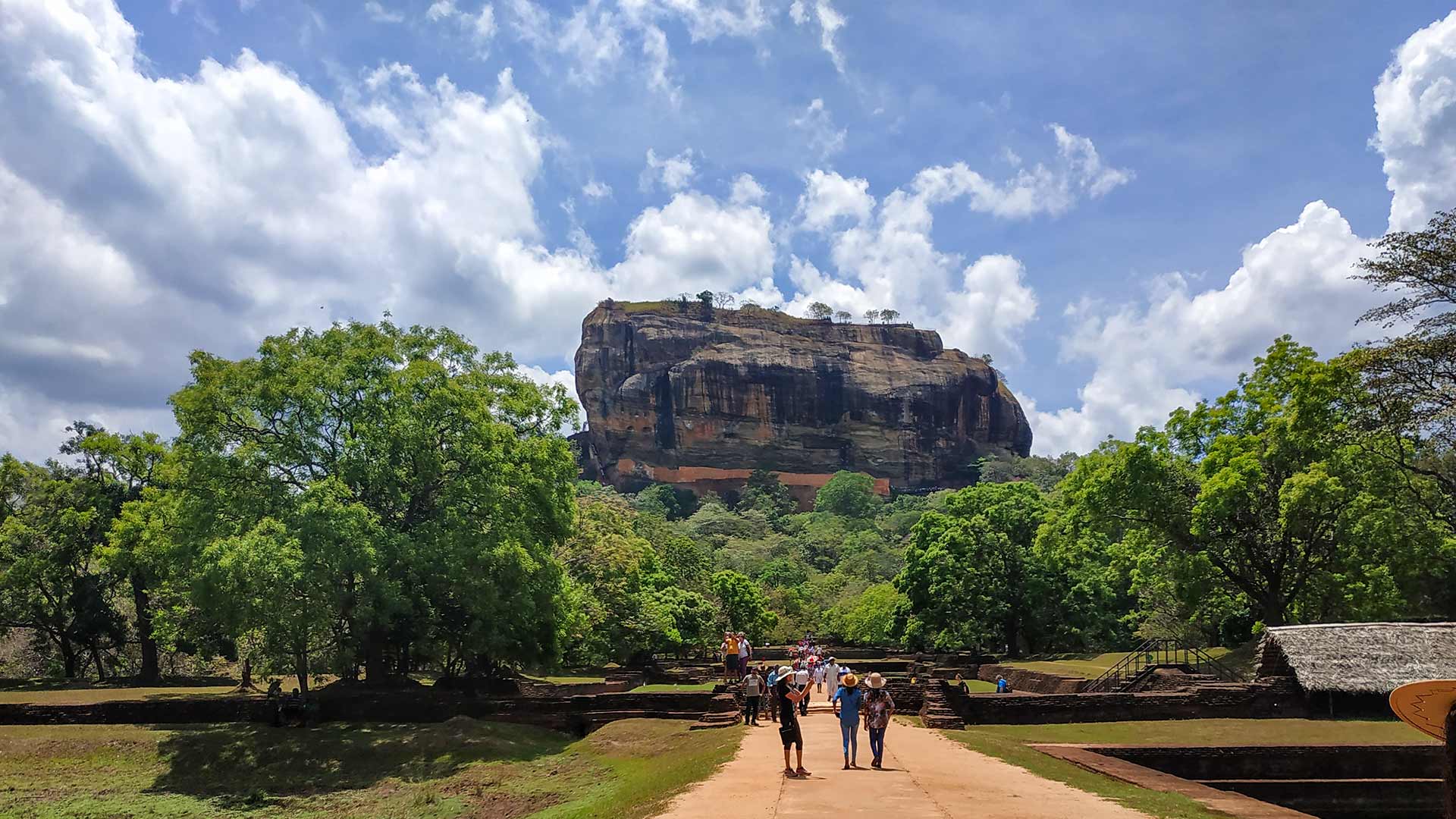
Access to the temple involves an exposed climb along the rock, offering panoramic views of the surrounding plains, including distant views toward Sigiriya. The site remains an active place of worship and an important cultural symbol of Sri Lanka's Buddhist heritage.
Visitor planning
Entry and visitor planning
Check current entry arrangements, site-specific guidance, and the approach before travelling.
- Visiting times and conditions
- Year-round; choose cooler daylight conditions
- Fees and entry
- Confirm locally (Confirm current cave-temple admission and opening conditions through the Central Cultural Fund or the authorized site counter. Do not assume a separately listed Dambulla Museum fee is the cave-temple admission price.)
Location
Dambulla, Matale District, Central Province
Getting to the site
- From Colombo (~150 km • ~4 h)
Choose an approach
Select a marker to open that location in Google Maps.
Visitor guidance
Review these site-specific notes before visiting
- Steps can be steep and slippery - wear proper footwear.
- Beware of monkeys around the temple area.
- Rock surfaces can become very hot during midday.
- Follow temple rules and respect religious practices.
Travel Tips
- Visit early morning or late afternoon to avoid heat during the climb.
- Wear modest clothing covering shoulders and knees.
- Remove shoes before entering cave temples - bring socks for hot surfaces.
- Follow current photography signs and site-officer instructions inside the caves; do not use flash or photograph prohibited areas, and obtain prior approval for professional filming or drones.
- Combine your visit with Sigiriya Rock Fortress nearby.
Gallery
Where to go next
Continue planning
These suggestions use reviewed itineraries, routes, and travel groupings. Map closeness alone does not prove direct road or trail access, especially across mountain terrain. Check each guide's Access section before combining stops.